


Technical Specifications
Operating Frequencies:
486.4 to 639.9 MHz
Block 19: 486.4 to 511.9 MHz
Block 21: 537.6 to 563.1 MHz
Block 24: 614.4 to 639.9 MHz*
*This block is targeted to be banned by the FCC for use within the US by July 13, 2020.
Frequency control:
Crystal Controlled PLL Sensitivity: 1 uv (20 dB SINAD)
Signal/Noise ratio:
95 dB A-weighted
Squelch quieting:
90 dB
AM rejection:
50 dB, 10 uV to 100 mV Modulation acceptance: ±20 kHz
Spurious rejection:
Greater than 70 dB
Third order intercept: 0 dBm
Frequency response: 100 Hz to 10 kHz, (±1db)
Pilot tone: 29.997 kHz, 4.5 kHz deviation (fixed crystal controlled)
Audio output: 1V RMS into 50 Ohms minimum
Antenna: Headphone cable
Programmable memory: Switches set default frequency; up to five additional frequencies can be stored in memory
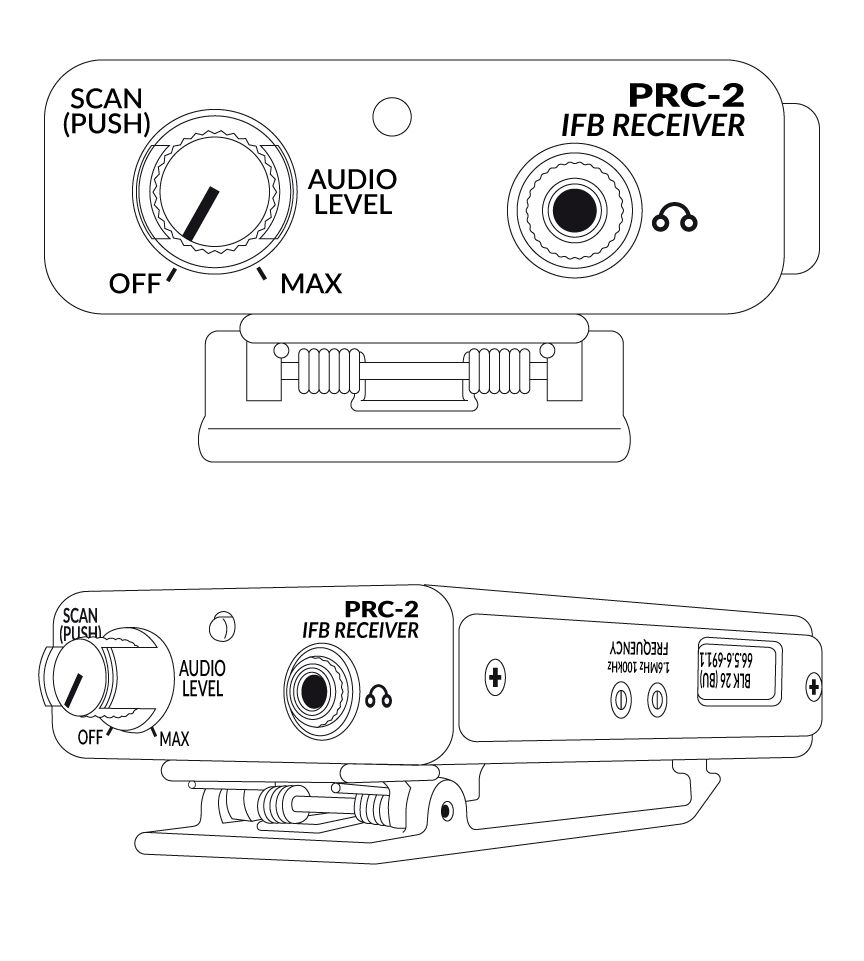
Front panel controls: Single knob controls Audio Output Level, Power on, programming and Scan Frequency Selection
Indicators: Multi-color LED indicator for power on and battery status. Blinks to indicate channel number and during scanning.
Power requirement:
9V alkaline battery lasts about 8 hours
9V lithium battery lasts about 20 hours
Power consumption: 60 mA
Weight: 7.3 oz with battery
Size: 3.6 x 2.4 x 0.8 inches (housing only) (belt clip and knob extend beyond the housing)
Features and/or Benefits
Simple Design
This 7.3-ounce receiver beltpack is small and simple in design. The spring-loaded clip allows the receiver to be securely mounted on belts or removed to be worn in the pockets. The rugged machined aluminum housing protects the beltpack.
Easy Setup and Intuitive Operation
Basic operation is simply a matter of rotating the knob to turn power on and adjusting the volume level. Additional frequencies are added by holding the knob in until the LED begins blinking and the receiver begins to scan. The receiver will search for signals that contain a pilot tone and automatically stop scanning and wait for the operator to either store that frequency or continue scanning.
The default frequency of the receiver is set by two rotary switches on the side panel. Up to five additional frequencies can also be programmed into the receiver memory using the scan mode. If more than one frequency is stored in the receiver, the operator can scroll through all stored frequencies by simply pressing the volume knob.
Excellent Audio
The design uses +/-20 kHz FM deviation for efficient use of the bandwidth, with compandor noise reduction circuitry for an excellent signal to noise ratio. This is an ideal for discreetly monitor program audio during a production.


Reviews
There are no reviews yet.