


Technical Specifications
Audio
Resolution: 12 bit
Sample Rate: 24KHz
Frequency Response: 100 – 12KHz
CODEC: OPUS
Input Gain: -3dB to +3dB
Output Gain: -3dB to +3dB
Network Setting
Bit Rates: 32, 48, 64, 128Kbps
Packet Size: 5, 10, 20, 40, 60ms
Jitter Buffers: 0 – 1000ms
Connectors
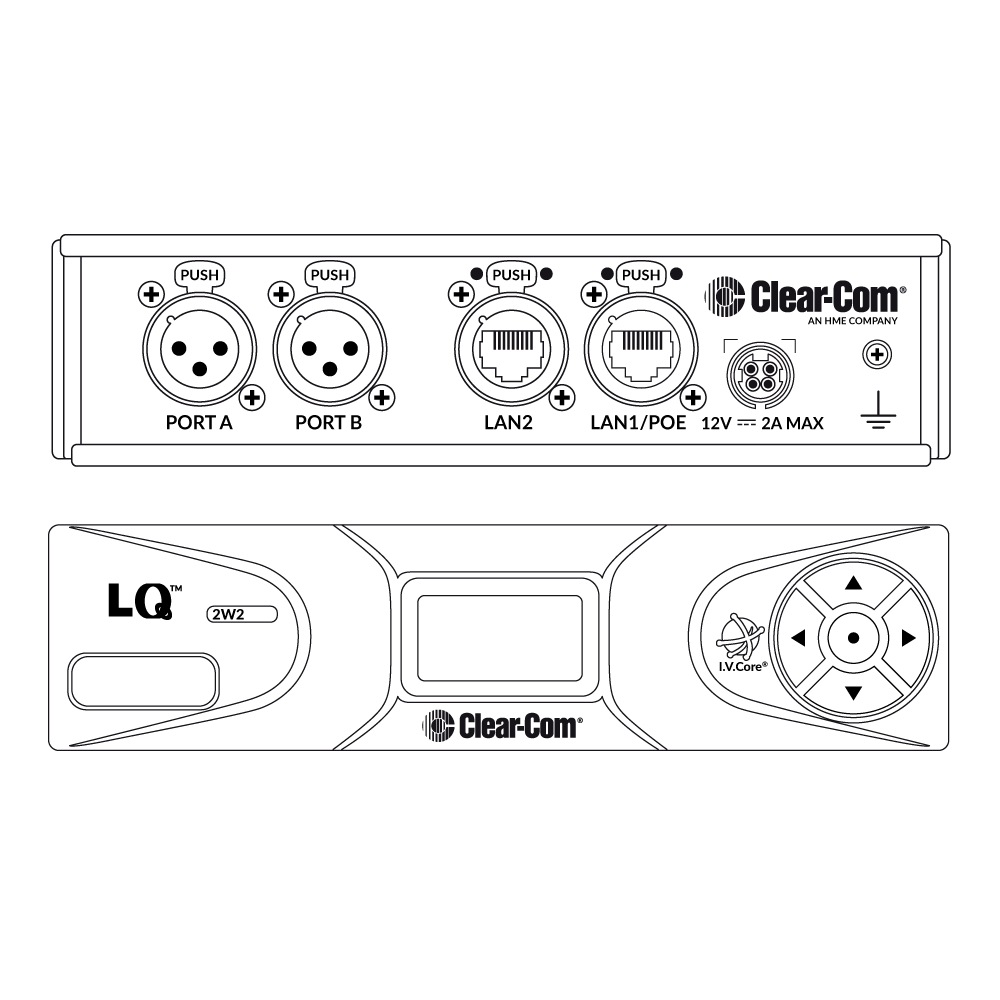
2 x EtherCON (female): 2 x Network
2 x 3 Pin XLR (female): 2 x Audio I/O
Partyline Output Current
Type: Clear-Com & RTS
Local DC Powered: 150mA
POE Powered: 70mA
Power Supply
Plug-in adapter with sleeve locking connector
(US, UK , Europe, AUS & China sockets included)
Input: 100-240V, 47-63Hz, 0.58A MAX
Output: DC 12V, 2A, 24W MAX
Environmental
Operating Temperature: +32°F – +104°F (0°C – +40°C)
Storage Temperature: -67°F – +158°F (-55°C – +70°C)
Humidity: 90%, non-condensing
Dimensions
6.8in W x 1.79in H x 8.45in D
(173mm x 46mm x 215mm)
Weight
1.83lbs (.83kg)
Features and/or Benefits
Linking 2-wire Intercom Systems
The general purpose of the Clear-Com LQ interfaces is to connect and route signals from multiple intercom systems and audio devices from point-to-point or point-to-multi-point, virtually anywhere over the secure IP network. 2-wire partyline device,s such as Clear-Com’s or any industry-standard intercom system, break away from traditional cabling and take advantage of available IP infrastructure for connecting to other 2-wire systems.
Extending Existing Intercom Systems
Need to add an intercom user position across campus and in the next town? Just interface your existing 2-wire partyline system, regardless of brand, with LQ-2W2 devices. Place the same LQ device at the desired position, then connect the 2-wire beltpack directly into the LQ device. Once devices are networked together with the Core Configuration Manager, the open communication link between these devices will allow everyone on the intercom network to talk or listen, depend on the configuration.


Reviews
There are no reviews yet.